BCR Romania Manufacturing PMI®: Romanian manufacturing economy deteriorates at a slower rate in February
Rates of decline in output and new orders soften - Stocks of purchases increase for the first time on record - Sharp and accelerated rise in input costs, but charge inflation cools
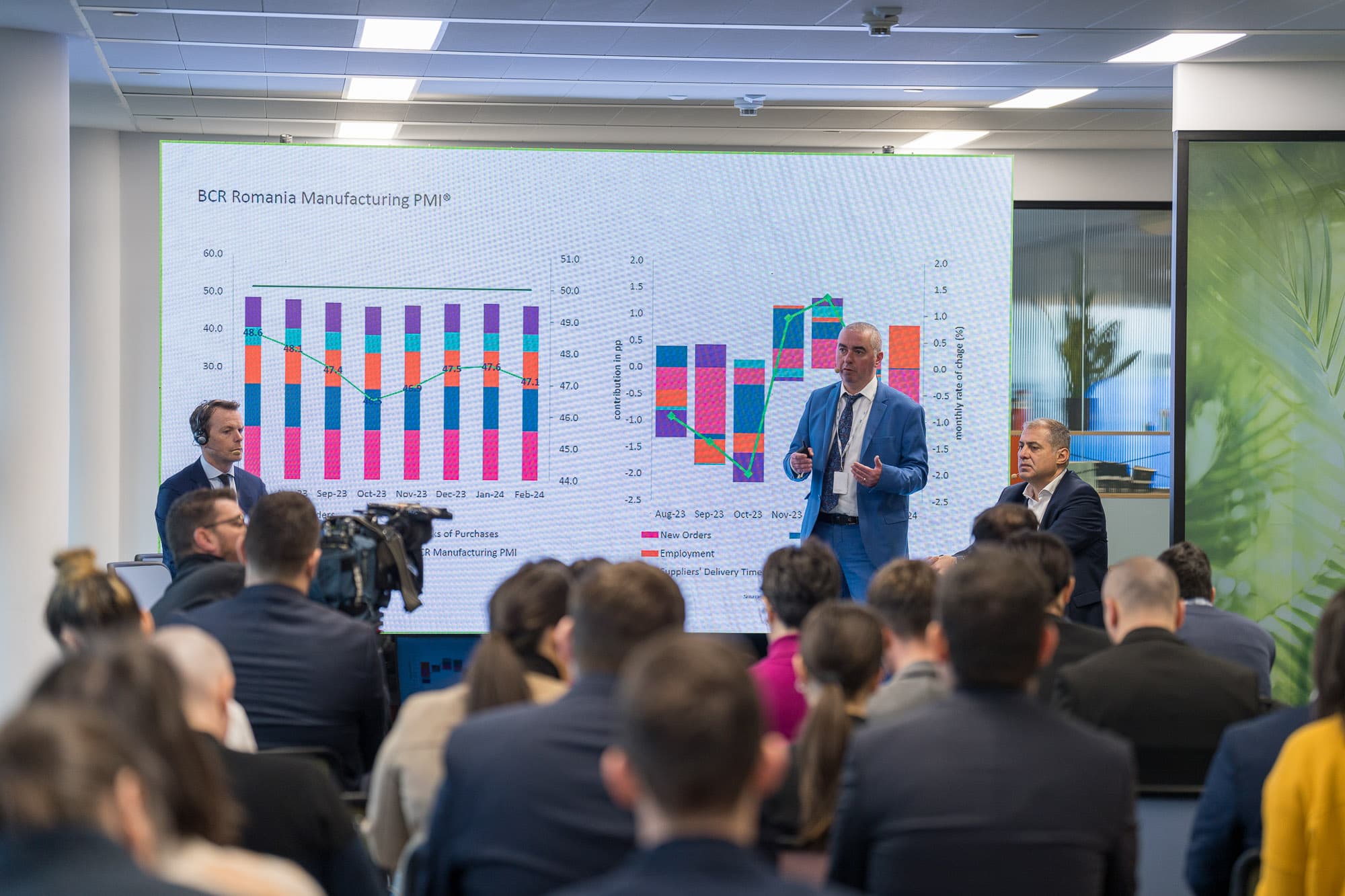
- Rates of decline in output and new orders soften
- Stocks of purchases increase for the first time on record
- Sharp and accelerated rise in input costs, but charge inflation cools
Latest data provided signs that the decline across the Romanian goods-producing lost momentum midway through the opening quarter of the year. Although conditions remained challenging, rates of contraction in output and new orders were both softer on the month. Notably perhaps, firms built input stocks for the first time on record (albeit only marginally), amid reports of delivery delays.
With upward pressure from a variety of sources, input cost inflation was both substantial and above trend. Firms were reluctant to fully pass on increased cost burdens to customers as demand conditions remained subdued, and so charges were raised at a softer pace than in January.
The headline BCR Romania Manufacturing PMI® is a composite single-figure indicator of manufacturing performance derived from indicators for new orders, output, employment, suppliers’ delivery times and stocks of purchases.
A PMI reading above the 50.0 no-change mark signals an improvement in the health of the sector over the month, while a figure below 50.0 points to a deterioration.
The headline PMI posted at 48.3 in February, up from 46.1 in January, to signal the weakest decline in operating conditions for six months. All bar one of the five PMI components imparted a positive directional influence on the headline index in February (the Suppliers' Delivery Times Index was unchanged from January).
Although goods producers across Romania were hindered by a sustained downturn in new orders, the rate of contraction was the weakest across the current eight-month sequence of decline. Where a decrease in orders was reported, firms often blamed weak demand conditions. Given that there was a stronger reduction in export sales in February, the slowdown in the rate of decline in total new orders came amid signs of the contraction easing in the domestic market.
Production volumes continued to fall at Romanian factories, although they too exhibited a softer rate of decrease on the month.
Firms reacted to lower production requirements by reducing their workforce levels at a modest rate in February. According to panellists, this was achieved through the non-replacement of staff leavers. Nevertheless, there were still signs of spare working capacity as backlogged orders were depleted for the eighth month running, and at a slightly stronger pace than in January.
Input purchasing was another area in which Romanian manufacturers looked to retrench. Although buying activity has now fallen in each month since June last year, the rate of decline lost momentum in February and was softer than the series average.