EU-GCC Trade cooperation: Elevating it to the next level
The Euro-GCC Economic Initiative Launch Event being organized on the 12th and 13th of November in Bucharest is taking place amidst big geo-political changes. Not only is the European Commission shaking up its team with a new college of…
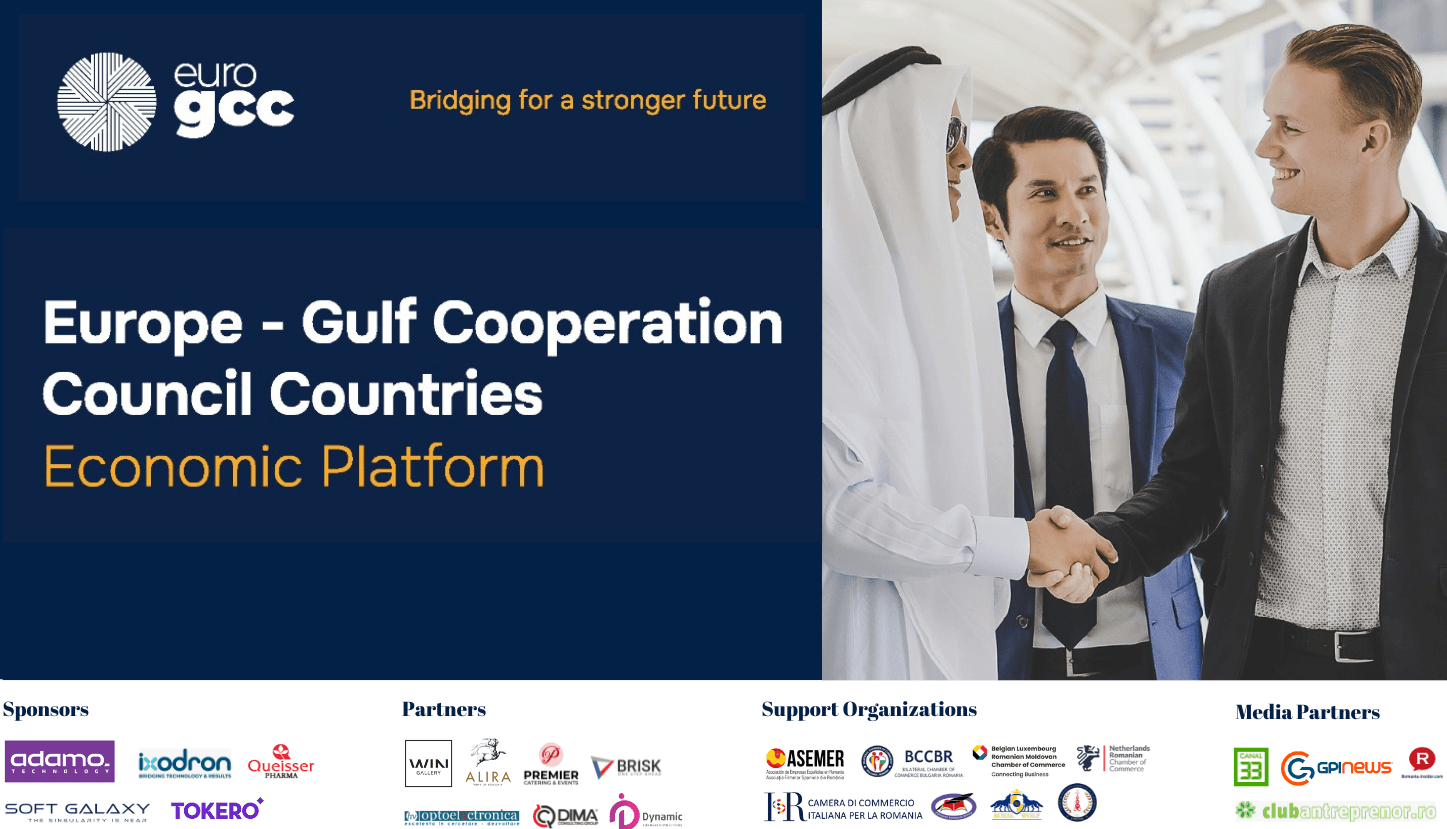
The Euro-GCC Economic Initiative Launch Event being organized on the 12th and 13th of November in Bucharest is taking place amidst big geo-political changes. Not only is the European Commission shaking up its team with a new college of commissioners under the leadership of Ursula Von Der Leyen (mark II) and the European Parliament and the Council of Ministers set to implement a new strategic partnership with the Gulf, but we have also just witnessed the re-election of President-Elect Donald Trump.
These changes will mark a change in approach to geo-political tensions, international trade and above all, new cynergies and dynamics. All this points to a plethora of opportunities starting with the certainty that Donald Trump will restore relations with the Arab Gulf but also through the possibility of the creation of a free trade zone between the the Gulf Cooperation Council and the European Union as reiterated in the first EU-GCC Summit held a month ago.
The present and future will not be all rosy. The GCC members still view the European Union as divided and not talking with a single voice. Discussions and negotiations on a regional free trade zone have been stalled for almost 30 years while all ongoing discussions on a shengen visa for GCC nationals were halted following the Qatargate corruption scandal saga. Furthermore, disagreements on human rights, humanitarian law, and justice together with the parties' individual position on Iran and Israel are viewed as stumbling blocks to further enhanced cooperation.
One must also add that many fear that all hands will be on deck to focus on war-torn countries such as Ukraine and the Middle East and other important regional issues from Iraq to Syria, Lebanon and Yemen leaving no room to other areas such as trade, people to people relations and climate, amongst others.
That is why such initiatives like the one being organized during these two days by a team of eternal optimists, founders and directors at the Euro-GCC Platform for Economic Initiative, including the undersigned, can help charter the way to elevating trade, eduction and cultural exchanges to the next level.
The current state of play
But lets pause for a while and dissect the current state of play between the GCC and the European Union. Two years ago the European Parliament and Council drafted a new blueprint on a strategic partnership with the Gulf. Unilaterally and without much discussion with the other side, the European Union identified six areas or clusters to focus on, namely trade and investment, green transition and energy security, regional stability and global security, humanitarian and development issues, reform and human rights, and institutional cooperation.
The mixed reaction from the six monarchies of the Gulf Cooperation Council (GCC) and therefore Saudi Arabia, the United Arab Emirates (UAE), Qatar, Bahrain, Kuwait and Oman was justified. On one hand, this was a move in the right direction and cooperation in such areas identified above was definitely welcome. But the downside was that the latter were not extensively consulted during the process. Making matters worse, the GCC members viewed the document as too high level and not detailed enough to charter its implimentation. It was boiled down to a wish list without the necessary tools for action, key performance indicators, milestones and benchmarks. Many questioned whether the EU was in a frenzy to restore its relations with the GCC in the context that the former needed a quick substitute to Russian fossil fuels.