Bucharest Old Town Highlights: Manuc’s Inn and the Old Court, two of the most visited sites in Bucharest
Bucharest’s Old Town is one of the biggest historical attractions and among the most visited areas in the capital. It hosts two of the eldest and emblematic sites in the capital: the famous Manuc’s Inn and the Old Court, also known as the…
Bucharest’s Old Town is one of the biggest historical attractions and among the most visited areas in the capital. It hosts two of the eldest and emblematic sites in the capital: the famous Manuc’s Inn and the Old Court, also known as the court of the ruler Vlad Tepes (Vlad the Impaler).
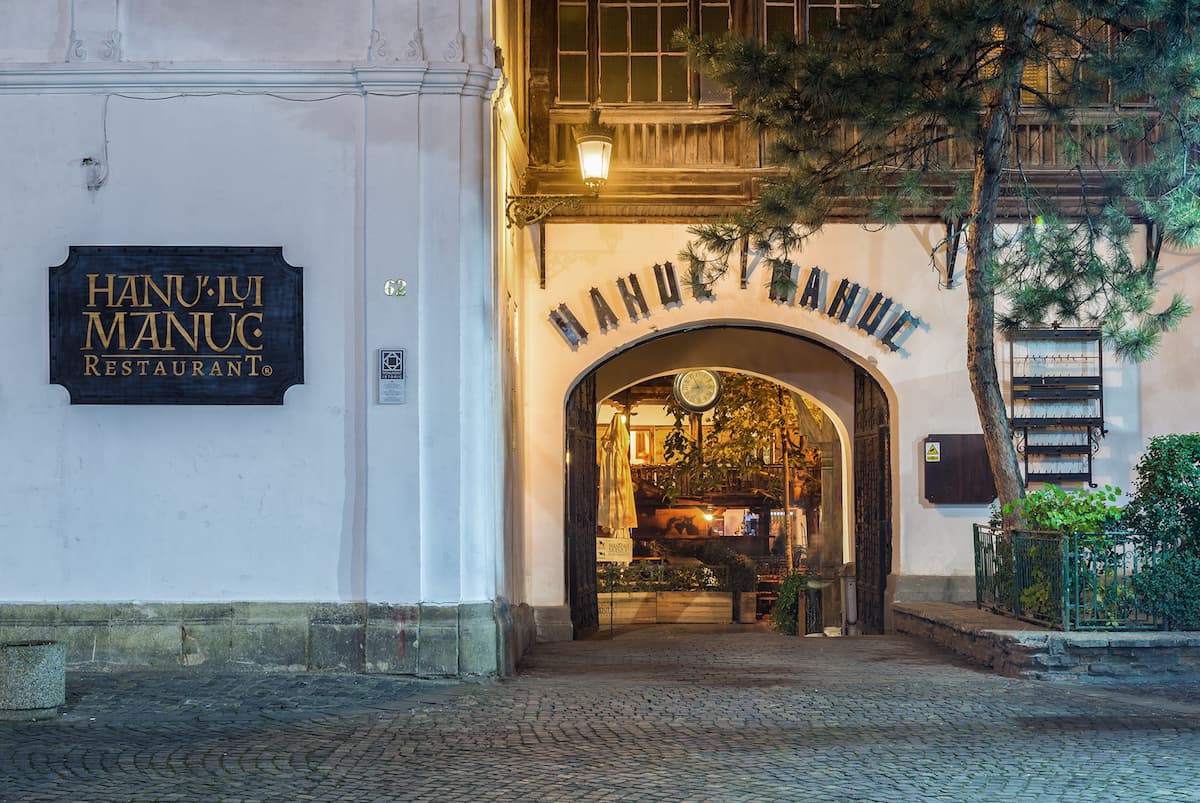
Manuc’s Inn is one of the few inns still standing in Bucharest, dating back to 1806 when construction began. It carries the name of its founder, Manuc Mârzaian, known as Manuc Bei, an Armenian merchant, and diplomat who had moved to the Romanian provinces of the time. He served as a dragoman and councilor to the Ottoman Empire, after which he became a bei (a sort of governor) of Moldova in 1808, also the date when construction was finalized.
The inn was part of the old Princely Court, located in the commercial center of the old town, surrounded by streets named after the various merchants in the area: Lipscani (tradesmen of goods brought from Leipzig), Gabroveni (tradesmen of cloth from Gabrovo), Covaci (blacksmiths) or Șelari (tradesmen of saddles and leather goods).
The Inn provided lodging and shelter for the caravans on their trade routes and served as the place where discussions regarding the peace were held and where the Peace of Bucharest was signed in May 1812.
After Manuc died in 1818, the inn changed ownership several times and carried different names. After following works in 1848 and 1863, the inn had already increased its capacity to 107 rooms at the top levels, 20 rooms at the ground level where there we also two large halls and 23 stores, while the basement had 15 cellars. Around 1880, the inn was accommodating a performance hall as well and at the beginning of the 20thcentury, it was turned into a cultural and commercial hub of the capital.
Nowadays, the inn still keeps some of the initial elements used in its initial construction. The interior yard has some of the wooden tiles from the 19thcentury, while the verandah, the pillars, and the stairs retain the original wood. The lamps were modeled after the original ones, as was the terrace’s wheeled well.
Today, Manuc’s Inn hosts the restaurant with the same name, several coffee shops, and stores.
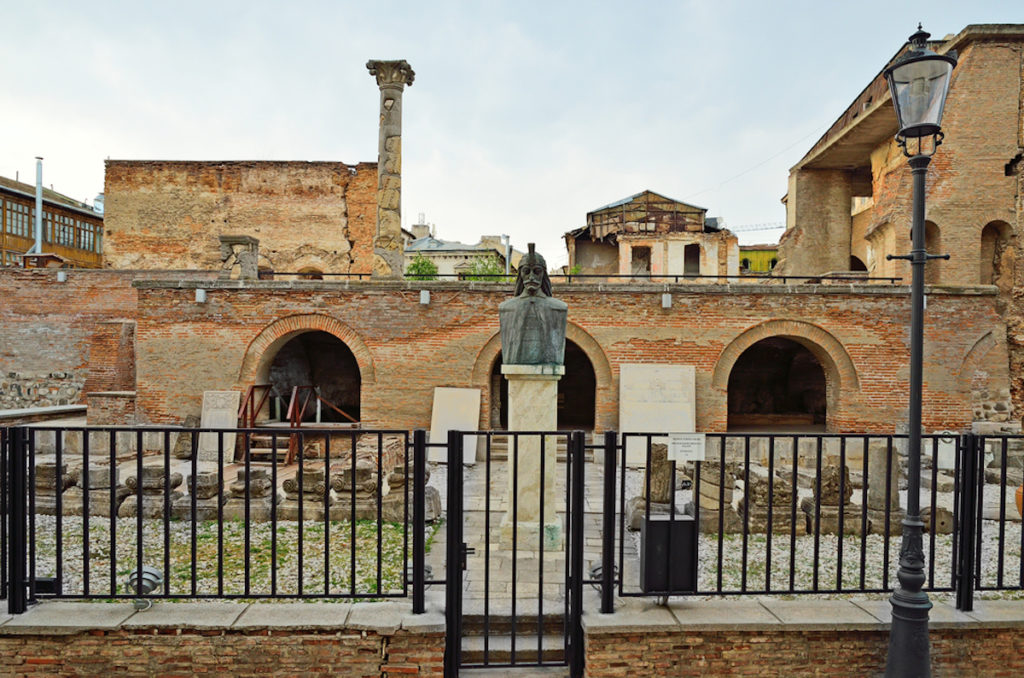
The Old Court dates back to the 15th century when Bucharest was the capital of Wallachia principality, and it’s the oldest medieval monument in the capital. Parts of this ensemble still exist today and can be visited in the Old Town of Bucharest.
The citadel was built by the order of the ruler Vlad Tepes (Vlad the Impaler) during his reign. He wanted to expand the surface of an existing brick fortress from the second half of the 14thcentury and surrounded it with stone walls. He was also the one who issued the first princely act in Bucharest on September 20th, 1459, considered the oldest documentary mention of the Town of Bucharest.