Bucharest Old Town highlights: Romania’s Central Bank Palace & its numismatic museum
One of the most impressive buildings in Bucharest’s Old Town, impossible to miss if you stroll around the area, is the Palace of the National Bank of Romania. This 19thcentury building hosts the headquarters of the country’s Central Bank…
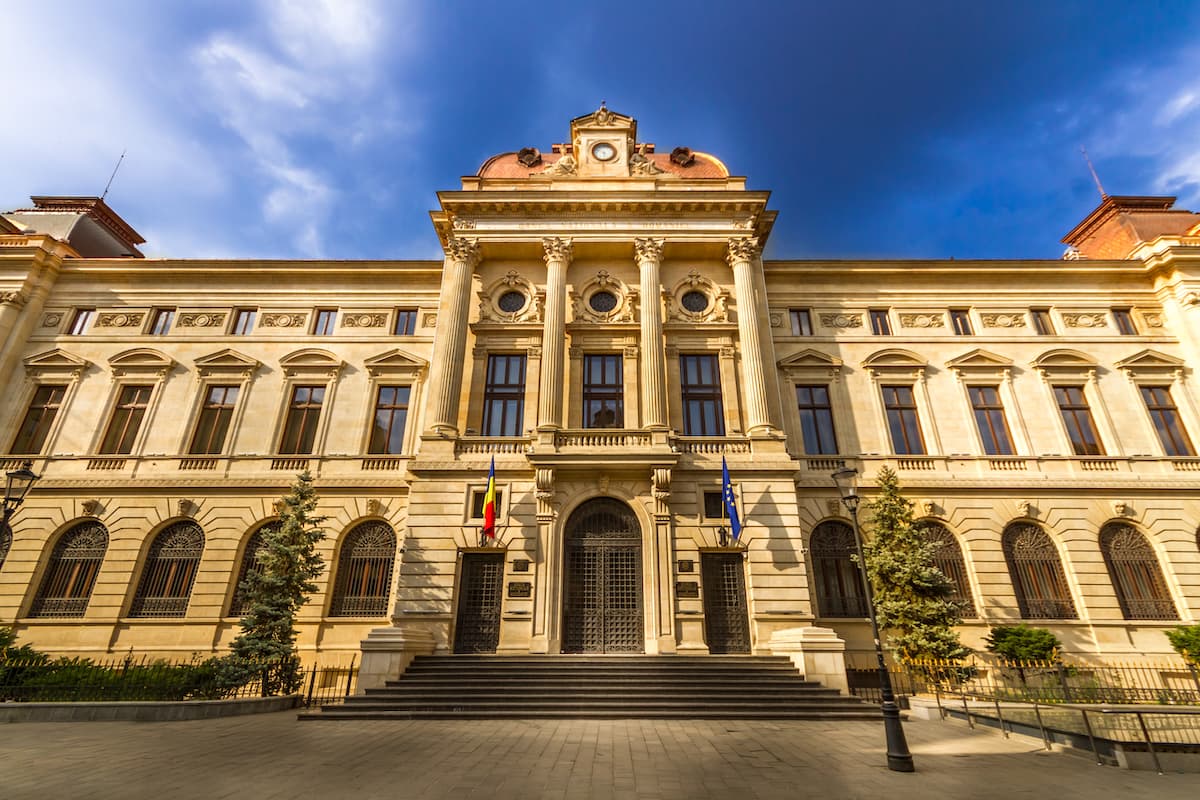
One of the most impressive buildings in Bucharest’s Old Town, impossible to miss if you stroll around the area, is the Palace of the National Bank of Romania. This 19thcentury building hosts the headquarters of the country’s Central Bank BNR, as well as a museum hosting an impressive numismatic collection.
The building, easily accessible at a side of the Old Town, is indeed impressive. The palace was constructed in the city’s oldest commercial part, in the area bounded by the old Lipscani street, Calea Victoriei, and Smârdan and Doamnei streets, on the plot that used to accommodate an inn called Şerban Vodă.
At the end of the 19th century, around the time when the palace was built, Bucharest has started to accelerate its architectural development. The BNR palace was the first important banking building in the capital and its architecture shows not only the importance of the institution but also the economic development of the time and the openness towards the European culture. It also marks the renewal of the capital’s architecture at the turn of the century. Most historic buildings still standing in downtown Bucharest were designed after the BNR palace was built: the Royal Palace, the Palace of Justice or the Palace of the Agriculture Ministry, or the Palace Hotel – built in 1912, now named Hotel Cismigiu, renovated and re-opened in 2012.
Architect Joseph Cassien-Bernard, a collaborator of Charles Garnier, the author of the Paris Opera, and Albert Galleron, who designed the Romanian Athenaeum, were chosen in 1882 to design the first project of the BNR palace. Romanian architects Grigore Cerchez and Constantin Băicoianu were then tasked with finishing the works on the BNR Palace.
In July 1884, works on the palace officially started. It took six years to finish the building, well beyond the estimated three years. Besides the extensive size of the project, both the Serbian-Bulgarian war of 1885, which triggered an interruption in the exploitation and transport of the Rusciuk stone used in the construction, and various difficulties in organizing the bids added to the delay.
The palace has numerous elements from French Classicism architecture, in the academic eclectic style. Six sculptures decorate the façade of the palace, four of which are placed on the lateral spaces. The latter were done by Ion Georgescu and Ştefan Ionescu Valbudea and they represent four allegorical characters: Justice (Themis), Agriculture (Ceres), Trade (Mercury) and Industry (Vulcan). Their symbolism communicates the BNR support towards the national economy.