Nature in Făgăraș Mountains: The jackal in Romania
Romania-Insider.com is publishing a series of articles about wildlife in Romania, zooming in on the wild animal and plant species in the Fagaras Mountains area. This editorial series is sponsored by the Foundation Conservation…
RI Newsroom · Journalist
· Updated · 4 min read
Romania-Insider.com is publishing a series of articles about wildlife in Romania, zooming in on the wild animal and plant species in the Fagaras Mountains area. This editorial series is sponsored by the Foundation Conservation Carpathia.
Not many think of the jackal when they think about large or medium-sized carnivores. But this species has been staging an impressive comeback, including in Romania, where it thrived in the past few years, being perceived as quite a controversial wild animal.
The beginning of the golden jackal (Canis aureus) is still uncertain but fossil evidence suggest that the species arrived at the southern edge of Central and Eastern Europe about 8,000 years ago. The ancestor of the golden jackal is believed to be the extinct Arno river dog that lived in Mediterranean Europe 1.9 million years ago.
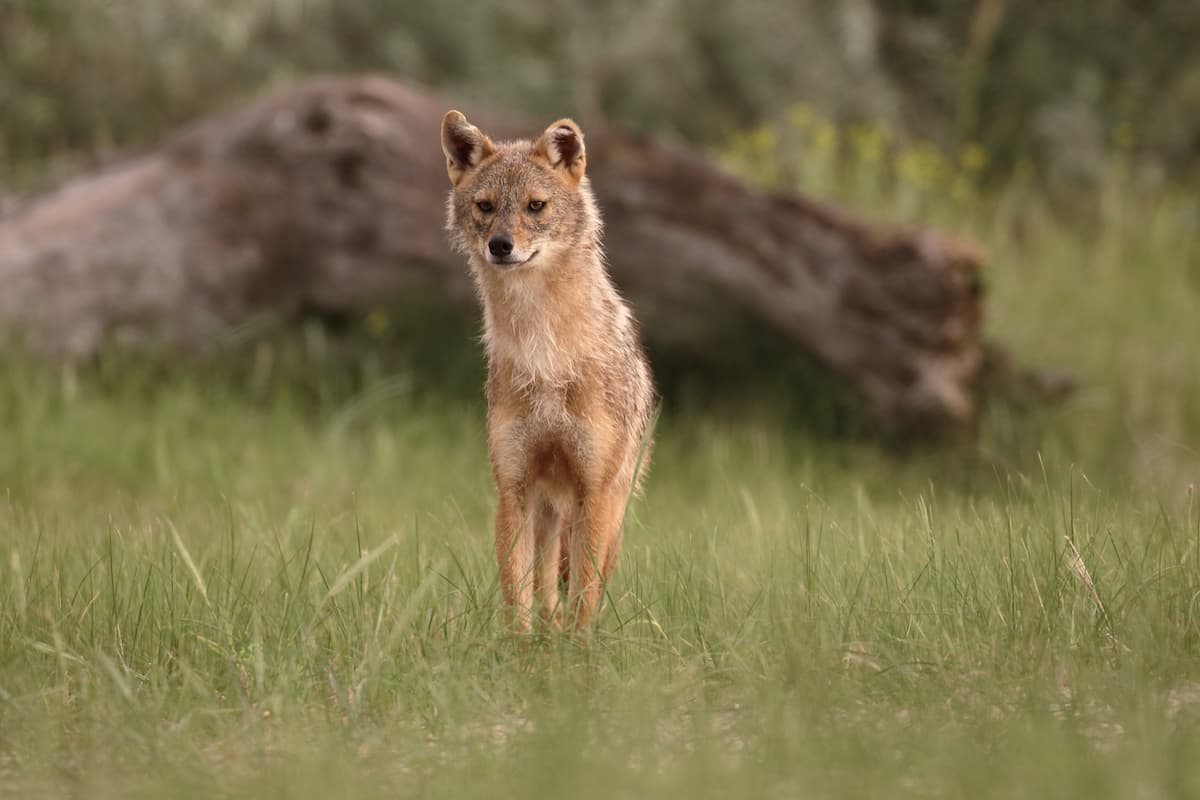
The golden jackal is a wolf-like canid that many often mistake for a small grey wolf. And that happens because the differences are rather subtle, with the golden jackal being smaller and more slender, with a narrower, more pointed muzzle, and shorter legs and tail.
Golden jackal males measure 71–85 cm in body length and weigh 9-15 kg while the females are smaller, measuring 69–73 cm and weighing 8-12 kg. The jackal’s fur is relatively short, with the base color golden, varying seasonally from a pale creamy yellow to a dark tawny. The fur on the back is composed of a mixture of black, brown, and white hairs.
The golden jackal is a strictly monogamous animal. The mating period usually lasts between February and April, with the pups (normally between four and eight) being born in April-June. Weight at birth is 200-250 grams. Pups' eyes open after about ten days. The pups are nursed for about eight weeks, and then weaned.
As for their social behavior, the breeding pair is the basic social unit, and they are sometimes accompanied by their current litter of pups. They are territorial and hunting families usually hold territories of 2-3 square kilometers throughout the year. Both the female and the male mark their territory. Family or pack members communicate with each other by a screaming yell and yapping, or a siren-like howl when a kill is located. Also, golden jackals give a warning call that is very different from their normal howling when they detect the presence of large carnivores such as wolves and tigers.
The jackals are opportunistic animals, being both predators and scavengers, with a diet that varies according to its habitat and the season. They eat both animal and plant food, including small (and even medium-sized) mammals, ground birds and their eggs, reptiles, frogs, fish, fruits, carrion, and antropogenic food sources like garbage and slaughter remains.