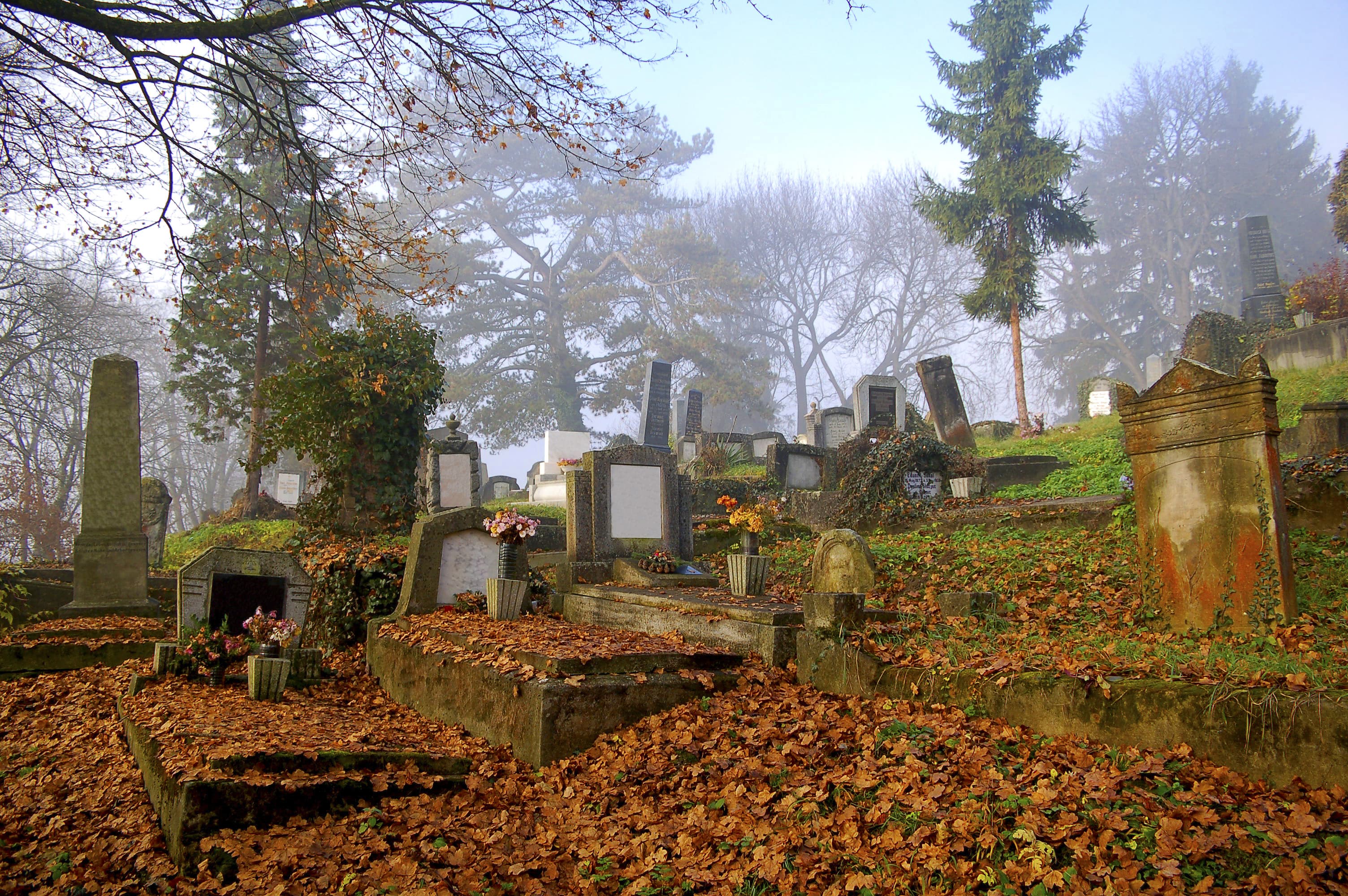
Romania Photo of the Day by Dreamstime: The Cemetery of the Church on the Hill in autumn colors
The Romania Photo of the Day created in partnership with stock photo provider Dreamstime aims to highlight the best of Romania. From stunning landscapes and popular tourist destinations and landmarks to people, traditions, and food, this…
Maiavankline · Journalist
· Updated · 3 min read
The Romania Photo of the Day created in partnership with stock photo provider Dreamstime aims to highlight the best of Romania. From stunning landscapes and popular tourist destinations and landmarks to people, traditions, and food, this series helps you discover Romania one photo at a time. This week, we put the focus on beautiful Romanian landscapes in autumn colors.
One of the most beautiful places to visit in the medieval town of Sighișoara is the Evangelical Church known as the Church on the Hill and its adjacent Evangelical Cemetery, which together crown the highest point of the town's Fortress. (Photo source - click on the number to get to the photo 10474925 / Autumn © Draghicich | Dreamstime.com)
One can reach the church and cemetery by climbing all 176 steps of the Pupils’ Stairway – a covered wooden staircase dating back to 1642, or by following the road that comes up past the School on the Hill. The beauty and grandeur of the XIV-century Gotic church and cemetery are such, says transylvaniabeyond.com, that even climbing twice the number of stairs wouldn’t be great an effort.
This Evangelical church, dedicated to Saint Nicholas, was built in several stages, with construction works starting as early as 1345 and ending as late as 1525.
The stages of its construction correspond, roughly, to various architectural styles. Thus, between 1200 and 1250 the church was in its Romanesque stage; followed by the early Gothic stage between 1250 and 1300, when the west end tower was erected; next came the the period between 1300 and 1429, which saw the construction of the three nave basilica; and finally, between 1429 and 1483 the church was brought to the appearance that has been preserved to this day.
Most of the paintings inside the church were authored either by Valentinus Pictor (the ones in the choir and the triumphal archway) in 1483 or by Jakobus Kendlinger (the ones in the north-south lateral nave) in 1488.
Among the church’s signature features are its crypt – the only one enclosed in an Evangelical church in Transylvania, containing a total of about sixty tombs underneath the walls of the choir; its beautiful Romanesque chapel; its exterior stone sculptures, the remains of which illustrate a portion of the Adoration of the Wise Men, and are some of the very few Gothic stone sculptures left in Transylvania; and the fact that one of its paintings illustrates the Holy Trinity in the rare interpretation of a person with three faces.