Guest post: The ascension of Populism and the Far-Right in Romania
Igor Feio, a Portuguese citizen living in Romania for over ten years, analyzes the mechanisms that favored then rise of populist and far-right parties and candidates in the recent presidential and parliamentary elections.
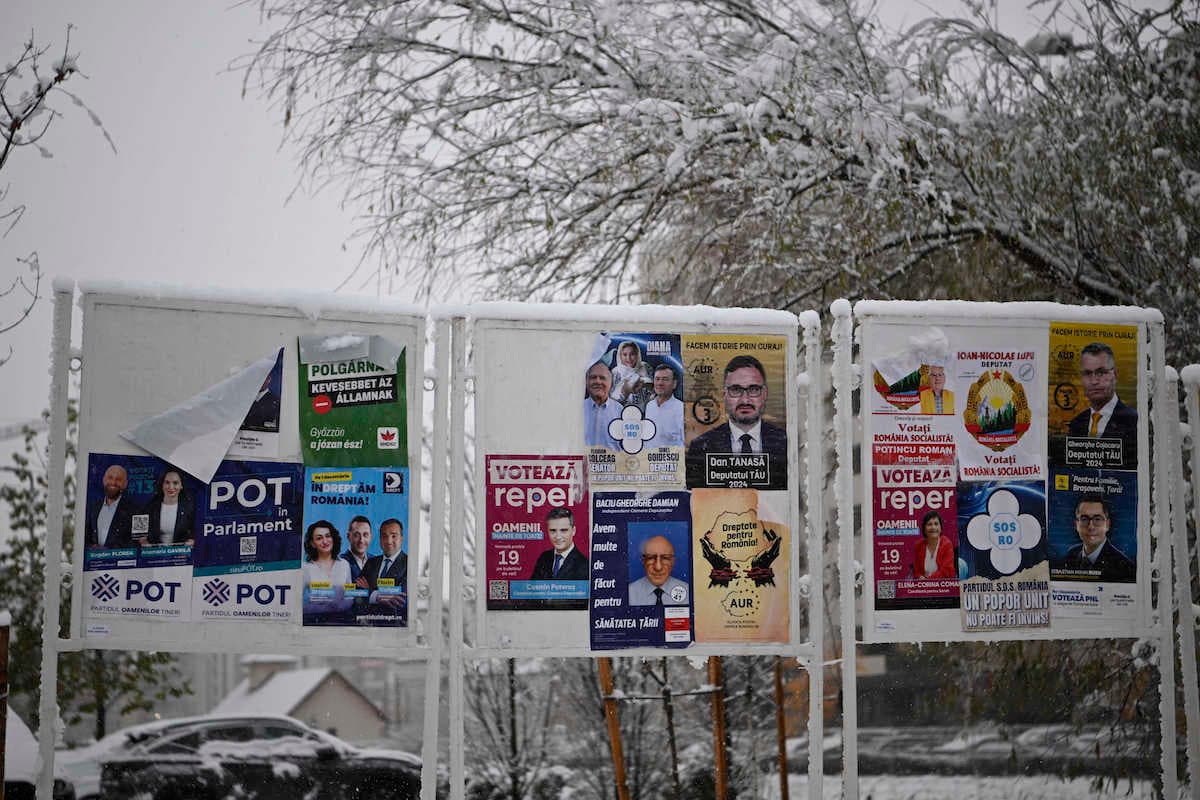
Igor Feio, a Portuguese citizen living in Romania for over ten years, analyzes the mechanisms that favored then rise of populist and far-right parties and candidates in the recent presidential and parliamentary elections.
Throughout Europe over the last half a decade, movements and parties from what is considered to be a far-right and populist ideology based on patriotism, nationalism, and traditional values, has been growing powerfully. Some consider that the initiator and influencer of this ideal is Donald Trump, recently elected once again as President of the USA, who transported the message “Make America Great Again” slightly over the world, though mainly in the old continent. And even if in Europe right-wing parties are not a thing of the moment, neither came to exist only recently – Marine Le Pen and her father in France, the most popular nationalist movement in Europe, can vouch for that; the form of doing politics and campaign was truly imported from the other side of the Atlantic, being constantly replicated in each European country. Basically, a playbook that is being used over and over again, replacing simply the word America by another country.
In Romania, this populist tendency arrived later though it seems, at least for the following years, that will continue to grow. But more important than acknowledging the fashion trend imported from the outside world, is to understand why it propagated and will continue to do so.
Fragmented Society
It is common and perfectly normal to make a generic division, most of the times accurate, within the societies of a particular country. Not related with classes, as in rich or poor – which could also be an indicator of how people vote and why; though as in developing areas. In the majority of the European countries, society is divided by urban and rural areas. And that provides us with a lot of potential indicators regarding several topics such as, education, income, health, and political orientation and vote. An example of this was with the Brexit referendum, when several newspapers and political data companies analyzed the results, revealing that in rural areas about 55% of the people voted to leave. When in opposition urban areas such as London, Manchester, Cardiff, Edinburgh, Glasgow or Liverpool had an average above 60% of voters who wanted to remain in the European Union.
Romania on the other hand it is a very particular case. If we look at the urban side, we immediately need to exclude Bucharest. Here, for good or bad, we have the center of all Romanian development; the financial epicenter, where more money is circulating and being invested, by individuals and companies; and is by far the largest city in the country. It happens however, that the rest of the country fails to witness its growth. Hence, here starts the division. Although Bucharest is the urban area with more population, about 2 Million people (approx. according with the Census and INS), this is a very small representation of the entire Romanian population – 19 Million. Meaning, roughly 11% of the country live here. And this leaves us with the question, where are the rest practically 90%? And the answer is simple, although confusing: everywhere. Since the density of the population is quite low, when in comparison with other European countries, the entire Romanian residents end up being spread all over the entire national territory. Something that it shouldn’t necessarily be negative but due to poor political management at all levels, especially in rural or interior areas the once promised better conditions – mainly basic ones as public water access, roads and infrastructure, between others – never or rarely came to existence.